Come October

It’s National Cask Ale Week! A perfect time to talk about why so many pubs are closing.  This is one of a series of beer poems I wrote this summer.
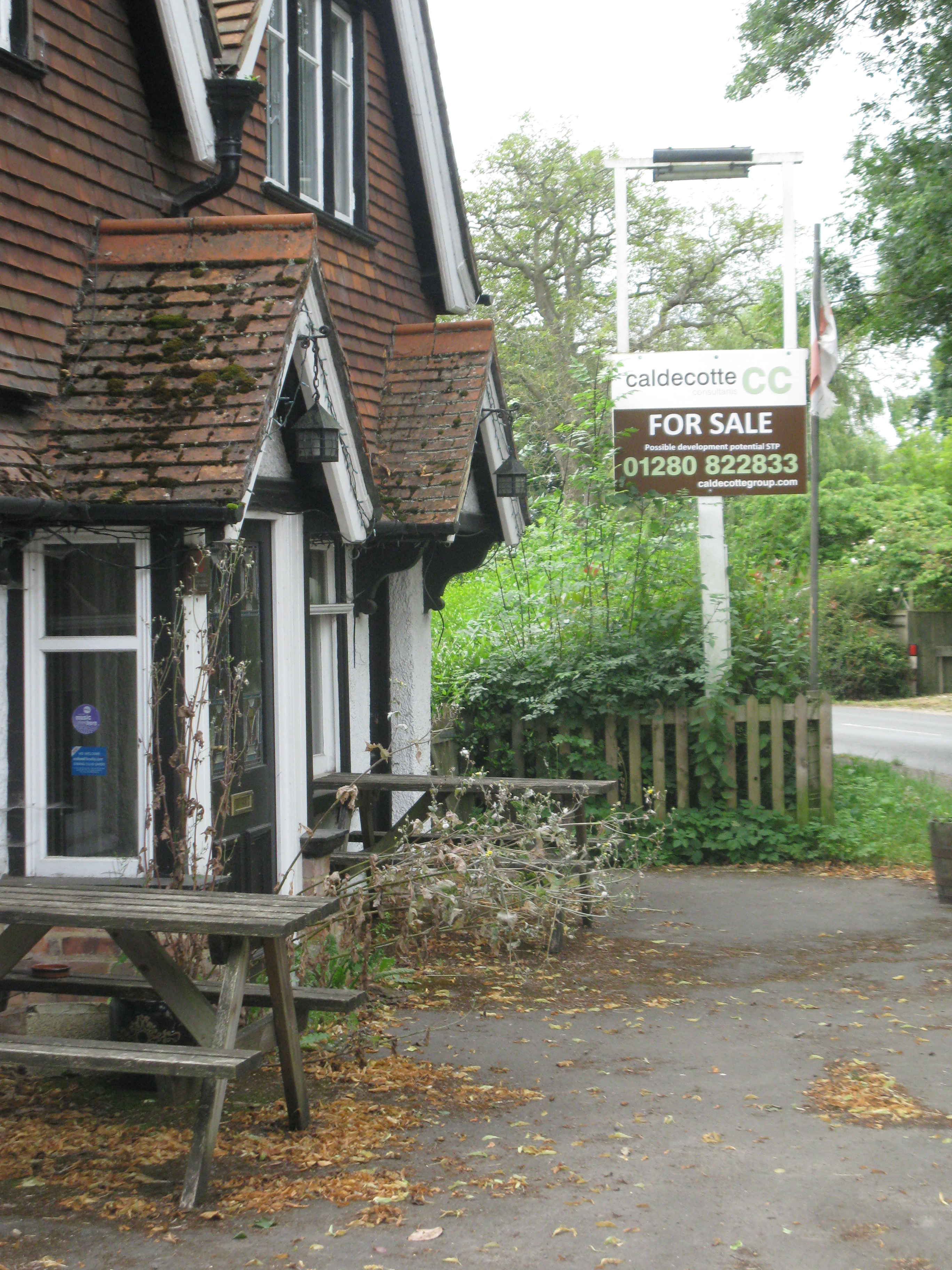
The Dog and Duck, Highmoor, Oxfordshire


Come October

we’ll be giving up the lease
on this place; calling time, ladies
and gentlemen, please. No-one drives
these country roads for beer, in case

they’re breathalysed. There’s not much call
for food, and you can’t build a trade
on crisps and nuts and lemonade. I’d say
it’s getting tougher every day.

The Brewery will want to find
another tenant; so they’ll start the rent
real low, but turn the screw
by raising it at each review,
until there isn’t any margin left
however good the management.
It’s no loss to them. They sell their bottled beer
in supermarkets at a higher price

than they can charge you here for draught;
no buildings – and no landlords – to maintain.
You’re right, it makes no sense;
with cask-conditioned ale,
its proper point of sale is in a pub.
Eventually, they’ll kill the licensed trade;
this place will go for Residential,
it’s worth more to the Brewery

dead than alive. The old Red Lion,
the Crown, the Dog and Duck, the Sun,
the Carpenters, the Cherry Tree,
the Fox, the White Horse, the Lamb;
sold off for asset-stripping, one by one.
Why should they care if pubs survive?
The taxman’s duty escalator adds
five pence a year on every pint;

nice that the cocktail-swilling Chancellor
decides what we can all afford to drink
on our nights out. So tell me this;
if they want a Big Society
then where’s it going to meet?
Are we building our communities at home,
when we grab cheap cans of lager from the fridge,
log in to Facebook, watch TV?

And we’ll be looking for another job
come October.

If you care, support CAMRA with their campaign to stop the duty escalator on beer, and preserve the local pub.  http://saveyourpint.co.uk/
The Reindeer is Relevant to my Interests.

I bought a copy of John Clegg’s first collection “Antler” while browsing the Salt Publishing website.  I think I liked the cover.  But I am really glad I did buy it; it’s a superbly cohesive first collection and really ought to be a contender for the Forward Prize.  My reivew of the collection (with photo of the jolly cover) appears as my first review for Dr Fulminare’s excellent poetry site – I’m so glad to be working with him –  and you can see it here:

http://www.drfulminare.com/cleggreview.php

Clegg’s editor, Roddy Lumsden (look how I am a namedropper) told me that he’s never had to do so little editing.  Clegg’s poems appeared fully-formed from the reindeer’s very skull. Don’t argue, just buy this one.

The Lighthouse

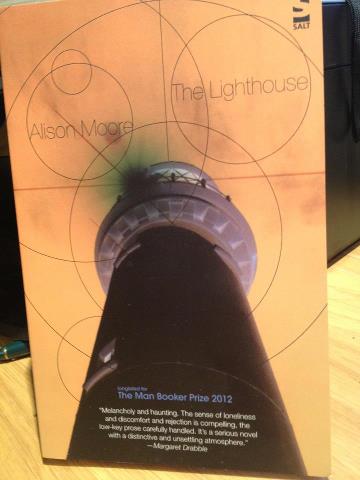
Alison Moore’s hero in The Lighthouse is called Futh; the sound you might make trying to spit out an insect that has flown into your mouth.  It suits him, he seems to irritate the people he meets, but the subtlety of Moore’s narrative is that he doesn’t really understand why. At the opening of the book, Futh is on a ferry, going on a solo holiday to Germany, his ancestral home, knowing that while he is away his wife is boxing up his belongings and moving them out of the house.  As in Virgina Woolf’s similarly-titled novel, the action is all interior, and the plot subservient to character. Futh takes the opportunity on his walk to remember his life, and we begin to understand the conscious and unconscious influences that have led him to his present predicament.

The lighthouse of the title is a silver perfume bottle treasured by Futh as a memento of his lost mother.  Futh himself is a perfumier and the book is pervaded with Proustian scents; oranges, violets, cigarettes, camphor. As the book progresses, the fragrances seem to intensify.  The lighthouse is also the name of the first and last hotel on his walking tour; Hellhaus, and Moore weaves in the narrative of Ester, the hotelier’s wife, whose future we feel is somehow bound up with Futh’s as he begins his circular walk.

Futh’s innate inadequacy is shown by his feet; first blistered in his boots, then sunburned in his sandals.  He misses meals and mixes up his hotel arrangements due to an inability to cope with the world.

The denoument is sudden and shocking, but after the reflection it caused, I began to think about fate and inevitability.  Alison Moore cleverly shows that what happens to Futh is the product of his memories and experiences. It is this commentary on our inability to escape our own nature which makes The Lighthouse a strong candidate for this year’s Man Booker prize.

The Lighthouse is published by Salt: www.saltpublishing.com

New Statesman

New Statesman magazine has an enviable history of publishing poetry. (It published (Edward Thomas’ “Adlestrop” three weeks after the poet was killed in world War I.)  It has recently renewed its commitment to poetry.

So I am delighted that last week it printed a poem of mine, and you can now read it here:

http://www.newstatesman.com/2012/09/deposition

Like many poems this one derives from a collision of two ideas.  The first was that last year I had the chance to visit Northern Ireland, a place that held my earliest memories.  Although born in the English midlands, I spent two years living in Antrim as a toddler. When my family returned to England, my pre-school peer group had plenty to say about the way I spoke.  The second was a TV documentary which explained how archaeologists can use the minerals deposited in a skeleton’s teeth to deduce where it’s owner spent his or her formative years; the Amesbury Archer, for example, was found in Wiltshire, but grew up in the Alps.  The poem is about prejudice, but also about the different ways a place can leave its mark on a person.

Comfort Food

There’s something very comforting about watching people bake, even if it is in a staged competitive situation like The Great British Bake-Off. Now, in a pop-up tribute blog called the Great British Bard-Off, some very good poets are writing their own poems in response to the works of art that are the lightest naan bread and the perfect pie. The blog is curated by Amy Key and Charlotte Runcie, and includes poems by AF Harrold, Roddy Lumsden, Porky the Poet (aka Phil Jupitus) Sophie Meyer, Adam Horovitz…

I’m very pleased that one of my poems is there.

tbsp.

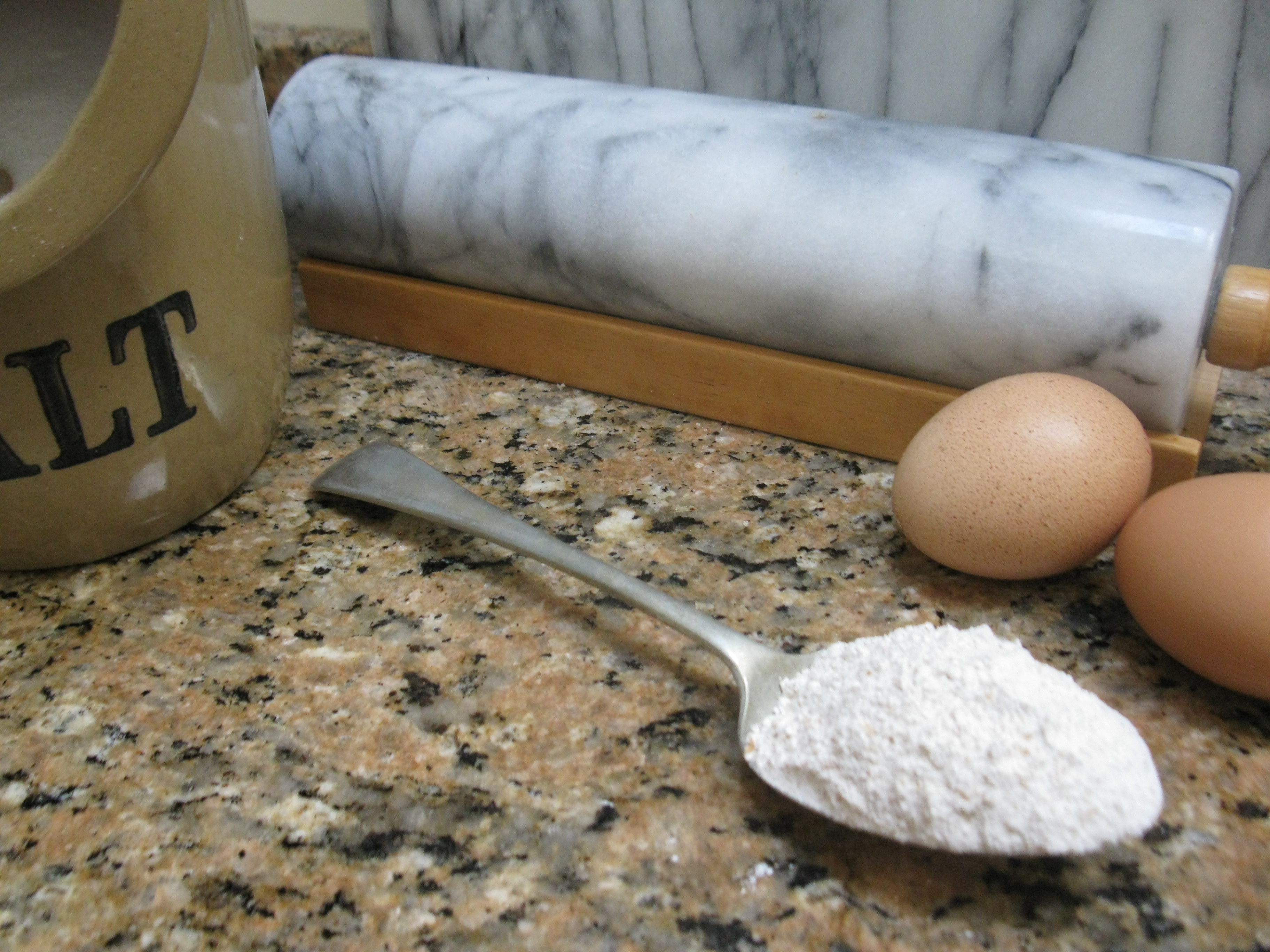
In my mother’s kitchen there were no scales,
all weighing was done by tablespoon;
for flour and sugar, a perfect ounce
heaped as much above as there is below.

With baking-soda, eggs and marge
we’d make sultana scones, jam tarts,
sandwich cakes,
not fancy, nothing requiring
the Be-Ro Book; all from memory.

Plain cooking, fit for a plainer life,
a recipe of expect the worst
in a stir of gossips, con-artists

and nosy-parkers, no-one you can trust.

She baked as she lived, liked only what she knew,
shunned the unfamiliar. I wish her life
had been ruled by the mantra of the mixing bowl;
as much above as there is below.

The Last of Summer

The Last of Summer

The first of September, and the last of the English summer;
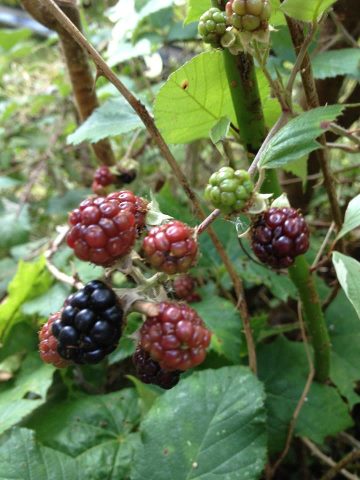
now the blackberries droop on their brambles, heavily sweet,
and birds mass on the humming lines like athletes lining up to race.
We wipe the dew from windscreens in the cobweb-heavy mornings.

Here ends a season dragged with clouds and lashed with soaking showers,
scant of picnicking and sunbathing and heatwaves spent on loungers.
Cheated of fetes and festivals, barbecues and beaches,
people pack away shorts and sandals in drawers and high cupboards,
shove airbeds and gazebos into garden sheds and garages.
School uniforms are hemmed and pressed and laid out for the new term.

Faces turning inwards towards TV screens and sofas
consider prematurely the serious work of autumn.
Electric light flicks on in every sitting-room and kitchen;
the nights, like the shedding hay wagons, intent on gathering in.

Nobody I Knew Will Ever Read This

Nobody I Knew Will Ever Read This

because it’s made of poetry;
because it has no proper rhymes,

because the lines don’t travel all the way
to the far side of the page.
Because the things it has to say
might be too embarrassing,
too
personal. Because it is free
from numbered clauses, short on bullet points;
o
f pie-charts, moving averages,
distressingly bereft. Because it’s left
aligned, not justified, and not designed
to be digested down to Powerpoint slides
for senior execs who don’t have time
or much of an attention span. Corporate Man
has no respect for poetry. It’s too
right-brain, and quite unlike
the careful analytical reports I used to write.
Come to think of it, nobody I knew
ever read those either.

What’s wrong with poetry?

It is a truth universally acknowledged that nobody makes money out of poetry. One excellent, established poet I know tells me she makes £3,000-£4,000 per year from her books and readings.  All her other income comes from teaching poetry and judging competitions.  Publishers can’t make a profit from poetry books.  Sometimes they subsidise their poetry list from their literary fiction; sometimes they themselves are subsidised by the Arts Council.  The excellent poet Sean O’Brien helped me understand why this is, when he suggested that the audience for poetry in this country is between 5,000 and 10,000 readers – and most of them also write it.  Why is that?  What’s wrong with poetry that it should be so unpopular?  In this soundbyte generation, something short, pithy and memorable ought to be the art form of the day, but it is so not the case.

It’s actually worse than that.  I studied life sciences at University, not English Literature, and spent 25 years of my life among scientists, medics, marketeers, accountants, managers.  During that time I never heard a single one of them talk about a poem.  They went to the theatre, they read literary fiction, they raved about movies, they took in the big art shows at the major galleries, but never ever had anything to do with poetry. I once asked a few friends which contemporary poets they might know of, hoping for names like Seamus Heaney, Andrew Motion, Carol Ann Duffy or even Roger McGough, most of them drew a blank.  One or two ventured; “Pam Ayres?”.

When I said that after taking redundancy I was going to study poetry, it closed down the conversation immediately.  Nobody ever asked me if they could see my poems; on the other hand if I mentioned my (still half-baked) novel it was all “Can I see it?  Am I in it? What’s it about?”  One friend of mine, who was an English Literature graduate, offered the view that going to study poetry was “What you do when you are having a nervous breakdown”.  I countered that with assuring her that studying poetry was going to save me from having that nervous breakdown.

So what has gone wrong?  Why is poetry such a minority sport?  Is there something wrong with the way poetry is taught in schools that turns people off?  Is it about the way it is marketed and sold?  Or is it such an acquired taste that it simply does not speak to anyone who hasn’t studied it in depth?

Is there something wrong with the poetry?

‘Some Bright Elegance’

The cover of Kayo Chingonyi’s new pamphlet depicts a wall daubed with graffiti and blood, which complements the contents perfectly; poems with a distinctly urban vibe.  It leads us into a world of city streets and hospital beds, nightclubs, mixtapes and video games, a ‘citadel of alleyways and corners’ where each scene Chingonyi offers us, also asks us questions.

In ‘Andrew’s Corner’ which was anthologised in Salt’s The Best British Poetry 2011, Chingonyi gives us a vivid close-up of a London street scene ‘where flowers moulder in memory of Tash, / fifteen, her twenty-something boyfriend / too drunk to swerve and miss the tree’ and ‘alleys wake to condom wrappers, / kebab meat, a ballet pump’. Two poems are based on a Tate Modern exhibition by the Brazilian artist Cildo Meireles; ‘Red Shift’ is largely a descriptive poem in which the narrator fills his apartments with red furnishings – there may be a political subtext to the poem although Meireles denied it in his art – and ‘How to Build Cathedrals’ explores the encounter between indigenous populations and colonial powers.  One of my favourites is ‘Guide to proper Mixtape Assembly’ which reflects with nostalgia on the dying art of creating the perfect audio cassette only to lose it ‘so gnarled by a tape deck’s teeth it refuses to play the beat you’ve come to recognise by sound and not name’.  Chingonyi, who is also a club MC, implies that the instant and perfect accessibility of the mp3 has trivialised and devalued our relationship with music.

The title of the pamphlet is taken from the controversial black American poet Amiri Baraka, and a thread of black consciousness weaves through the work, most strongly in the title poem, which celebrates black dancers, starting with Bill ‘Bojangles’ Robinson, and notes that the dancers take ‘the swagger in your step from the ochre dust of an African Village’. The final stanza describes small but hurtful experiences of racism, but ends on an upbeat note with dancers who ‘move as if it is only them and the drums talking’.

It is only towards the end of this pamphlet that Chingoyi’s Zambian family step into the spotlight. An affectionate portrait of his mwaice wandi – kid brother – and an ambivalent elegy for his father ‘known in the shebeens, as long John’  are followed by a harrowing depiction of his dying mother, the timeline of her illness and death measured by the size of her growing son’s shoes.

When Chingonyi speaks his poems; he has them all by heart, a relatively rare skill which allows the poet to connect more completely with his audience.  The same vibrant personality comes through on the page with language full of internal rhyme and complex rhythms. But it is the subject matter that most enthrals; I’ve heard several poetry grandees bewail the reluctance of British poets to tackle the ‘big issues’, but these poems do exactly that; issues of life, death, race, faith, family and authenticity are raised and meditated on here, in a thoughtful collection.

Some Bright Elegance is published by Salt, a poetry imprint which is coming into its own as a publisher of literary fiction, Alison Moore having gained a place on this year’s Booker longlist with her novel The Lighthouse.  Salt says that it plans to use its prose success to support its efforts in poetry, which is a laudable strategy if it continues to allow poets like Chingonyi to reflect back to us what it means to be human.

Mabel’s Domestic Cherry

Last Friday night when all of you were watching Danny Boyle’s amazing opening ceremony for the Olympic Games, we ventured to Swindon for a no less astonishing event; the launch of the second edition of that superb poetry magazine, Domestic Cherry edited by Mabel Watson and Ursula Pitt.

Below, life is a whole hamper of cherries.Domestic Cherry allegedly began because some lady poets thought that we girls were under-represented in the poetry mag world (a quick count in the latest Poetry Review shows the scoreline there to be Boys 28: Girls 29, so well done with that, George Szirtes).  Whatever – there were some great contributors in Domestic Cherry.  Several of them read at the launch event; sadly neither Sharon Olds nor Chase Twichell could make it, but their poems are in there.  Several of my favourite Reading girlie poets were there and there are a few boys in the mag too.

Between ourselves, Mabel Watson looks a lot like the Bard of Swindon, Hilda Sheehan, taking on a new authorial voice. Consider Roland Barthes and the death of the author; not so much the death in this case as a kind of temporary possession.

I’m sorry I didn’t get a photo of Hilda’s buddy, Barry, whose hi-vis jacket played hell with the flash on my camera.  But you can find out more about them both here, where there is also a picture of the splendid camel won in the raffle by Wendy Klein.  I’m not  jealous, even though I got the Marmite-flavoured chocolate.

Friday’s reading was very friendly and relaxed.  I got to read a couple of my poems and had a nice chat with Barry about psychogeography.  Their next event is October 6th, I believe, and I have already put it in my diary.

PS and there was tea, in proper teapots, and Tunnock’s tea cakes!