Heaney’s Gun

I’ve written in this blog before about the need to introduce more people to poetry and how to do it – well, I’ve started. The human dynamo who is Sarah Gregson, the Learning and Participation Manager at the Corn Exchange Theatre in Newbury, is keen to increase the poetry and spoken word programme at the theatre, so we have started ‘Poetry for the Petrified’ – initially, five evenings of poetry reading and writing, on Wednesdays, upstairs in the Balcony Bar. There were ten participants this week – some are already seasoned poets, some complete beginners, some with experience in other types of writing, some not.

Some of the students brought poems to share. We heard the end section of Tennyson’s “In Memoriam” – the Ring the wild bells bit – some Maya Angelou, Seamus Heaney’s poem ‘Follower’, a lovely piece by that famous poet “Anon” on the subject of trees and how we use wood, and this translation from a Turkish poem by Edip Cansever, which I really enjoyed.

I also brought a Heaney poem along; ‘Digging’ – the first poem in his first collection, partly because it sounded like a personal manifesto. That poem, and ‘Follower’ both seemed to lament his inability to take up the farming life, and hope that a life in writing would prove to be a worthy substitute. But one of our number did have a slight problem with the opening lines of ‘Digging’:

Between my finger and my thumb
The squat pen rests, snug as a gun.

Why a gun? When guns don’t feature in the rest of the poem? Was it some reference to ‘The Troubles’, or maybe a farmer’s shotgun? Or was it just that Heaney, who was a great one for ‘sonics’, fell in love with those blunt ‘u’ sounds and added that near palindrome for fun?

Anyway it set me thinking of Chekhov’s maxim (pardon the poor pun) about dramatic relevance, which has been variously stated – he probably said it several times:

“If in the first act you have hung a pistol on the wall, then in the following one
it should be fired. Otherwise don’t put it there.”

Did that gun really earn it’s place in the poem, or was it a distraction? A red herring? Very un-Heaney-like to make a slip up, but then it was a very early poem by the master. I’d be interested in your view on that.

We covered quite a bit of ground in that first class. Next week, I think we will talk about thinginess, and write some poems about Things…

Two-Centre Poetry

Saturday was a busy poetry day. In the morning I went into London to a meeting of the Tideway Poets at the South Bank Centre. This is a group that used to meet at the Poetry School for Jane Draycott’s Saturday Sessions – a really useful and inspiring poetry workshop. When Jane decided she needed a break from teaching, her students kept on meeting, and over a year later the group is still going strong. Our workshopping wrapped up at about three o’clock, then I legged it back through London, despite Transport for London’s best efforts to delay me, and got home just after five. I collected my Other Half and we set off into the sunset, to Swindon, for a very special poetry event; the prizegiving for Cristina Newton’s Battered Moons poetry competition – part of the Swindon Festival of Poetry.

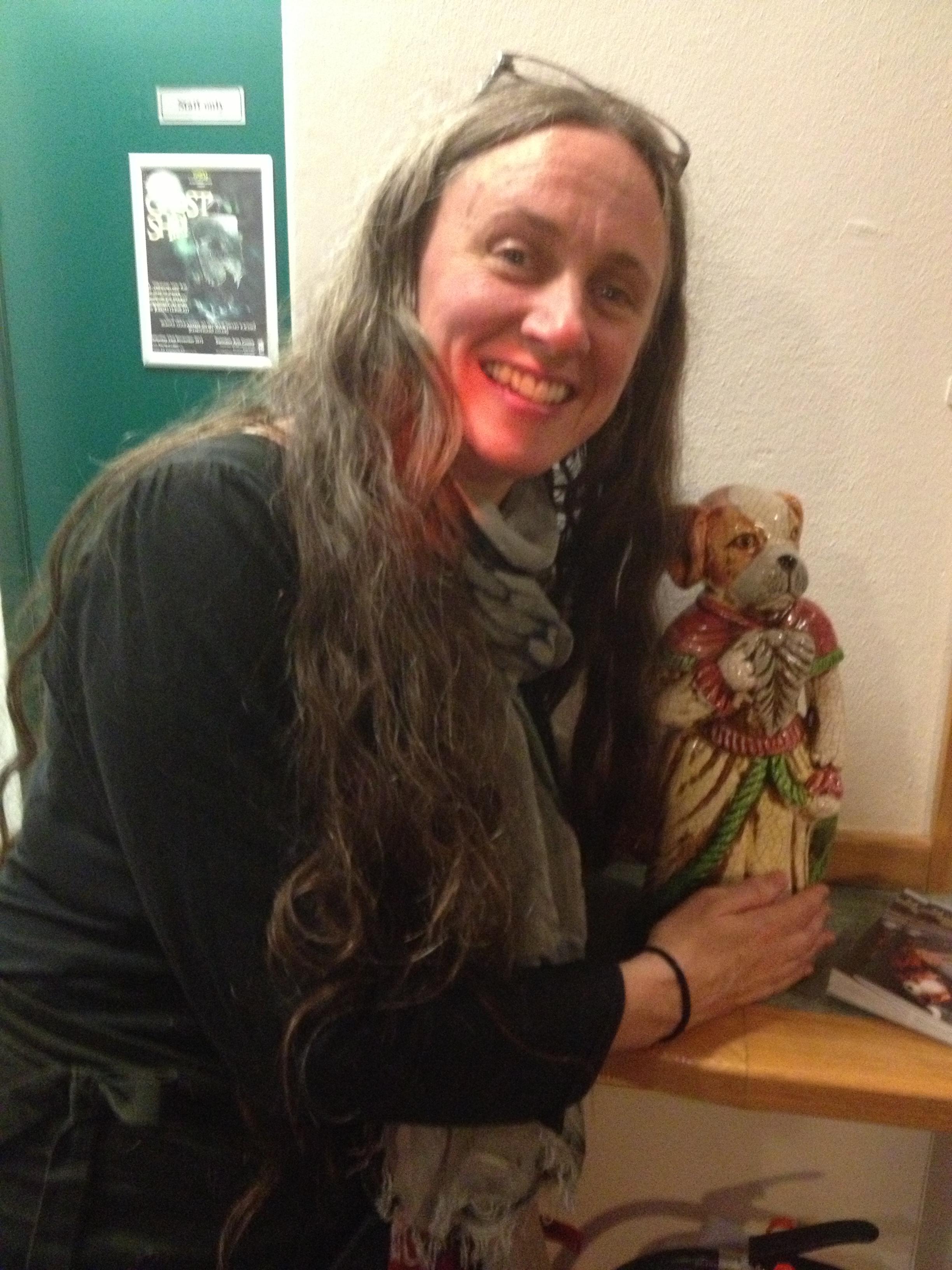
One of my Tideway colleagues was there; Ruth Wiggins was commended in the competition and read her mysterious poem (beautifully) which is entitled: “Confession: I’ve been crumbling antihistamines into your food all week”. Here’s Ruth, posing in Swindon Arts Centre with the festival mascot, who I am told is called Ophelia Dog.

Oswald etc 012

All the competition poems were of a really high standard. Thanks to Cristina, you can read them here.

The judge of the competition was the marvellous Alice Oswald, who read for us in the second half of the evening. Oswald is a fantastic writer, and also speaks all her poems from memory, which makes the whole event so special. I’d already got all her books, but bought another copy of Dart just so she could sign it for me afterwards. (However hard I try, I can’t resolve her signature into the name ‘A. Oswald’. It looks as though she wrote ‘Moomin’, which must be a Secret Message.) I had the chance to speak to her and congratulated her on memorising her poems. She told me it has become ‘a bit of a fixation – it’s all about the oral storytelling tradition’. She has, on occasion, recited the whole of her book ‘Memorial’ from…um… memory. She performed the last few stanzas of it for us on Saturday night, along with a section from Dart and many of her nature poems.

Oswald etc 014

I admire Oswald so much for ploughing her own poetic furrow down in Devon. She doesn’t clamour at the social media – as far as I know she doesn’t tweet, doesn’t have a facebook page, doesn’t blog. It’s hard to find anything of her on YouTube. She occasionally writes for the Guardian, is diffident about judging competitions, and diligently gets on with the writing that matters to her. Now Seamus has gone, she may be the finest poet writing in English today. I did get the chance to tell her that if I hadn’t heard her interviewed on BBC Radio 4’s Front Row back in 2002, I wouldn’t have bought Dart, wouldn’t have started reading poetry again, would certainly never have written any.

I’m going back to re-read some of her work before I try to write anything new.

Ancient and Modern

Just got back from holiday. I did something amazing this year – voluntarily went to sea on an actual ship! I’m not a good sailor, but the Aegean was relatively calm, and the ship lovely and comfortable. We flew to Istanbul, cruised through the Aegean, visiting Lemnos, Izmir, Skiathos, Delos, Mykonos, Santorini, Crete and Nauplia, and ended the tour at Athens. It was a wonderful, and rather luxurious, way to cram in a lot of history in the space of two short weeks.

One reason for this particular visit was that I really wanted to see Ephesus, because there are some scenes set there in this novel I am writing.  It is a wonderful site. Most of the ruins there are Roman, dating to the first century AD, and some of the places we visited would have been known to St Paul, St Luke and their colleagues in the early church. For example, here’s the road that leads down to the harbour that the apostles would have sailed from. What harbour? OK, it has long since silted up.

311

The tour company, Voyages to Antiquity, always have visiting lecturers on the ship. Dr James Morwood and Dr Thomas Mannack, both from the University of Oxford, were on board, and taught us a lot about the Classical Greek and ancient world we were visiting.

And we discussed this lady; Artemis of Ephesus, who vexed St Paul considerably, and who appears in my story:

316

There has been much discussion about the rows of bead-like objects she has slung around her torso. Are they breasts? bull testes? eggs? Dr Mannack is convinced they are dates. Which makes sense, as Artemis was a goddess of fertility and fruitfulness.

Also on the tour I was looking out for details about modern Turkey. It was important to try Turkish tea, for example, and to see the landscape and describe how people are dressed.

While lounging on deck, I learned a lot about the more recent history of the region by reading Louis de Berniere’s novel Birds Without Wings, which is set in the declining Ottoman empire of the early 20th century, and explains much of the animosity between the Turks and the Greeks – a distinction which the Ottoman people would not have made. For example, I learned that Mustafa Kemal Ataturk, the “father of the Turkish nation” was born in what is now Thessaloniki, which belongs to Greece. Was he even Turkish at all? Well, that depends…

Our last day on the Turkish part of the trip was spent in Pergamon; the home of: a famous library, the first books on parchment, and the second century AD physician, Galen. He makes a cameo appearance in my story. Here’s the Asklepion, or hospital, of Pergamon, which we understood was something like a modern spa resort, with baths, massages, medical treatments and some psychological therapies too.

386

I learned so much. What a fantastic way to research a novel!

Poetry Book Fair

001

Yesterday was a wonderful poetic day in London. The Poetry Book Fair, masterminded by Charles Boyle, put on a great show at Conway Hall. There were dozens of poetry presses there with their books – from Bloodaxe and Picador to the tiny hand-made publishers. I got to talk to a few of the ones in between; Kirsten Irving & John Stone from Fuselit, Todd Swift from Eyewear, Helena Nelson from HappenStance, Maria McCarthy from Cultured Llama, and Karen Mosman from Two Rivers Press.

But the biggest shout out has to go to Adele Ward and Mike Fortune-Wood at Ward Wood, who have a decent number of other poetry books on their list, but kindly donated their half-hour reading slot to four of us from the Royal Holloway MA course. Ward Wood publishes the “Bedford Square” anthology of new writing from the course every year. It was a delight to share the stage with Sarah Nesbitt (and baby), Caroline Squire and Lavinia Singer. Also great to see such a lovely, and quite distinguished, audience at our reading.

And then in the evening, we decamped a few yards up the road to the Square Pig and Pen pub, where the readings continued.

As for the poets; well Hilda Sheehan and Bethany Pope were among the Cultured Llama readers. Christopher James was excellent for Arc Publishing, and do look out for Penny Boxall‘s book from Eyewear which is due out next February. What I liked about James and Boxall in particular was the quirky range of subjects they tackled. James on the Age of Hats was great, and Boxall, on three shipwrecked sailors who were all called Hugh Williams, inspired. They both get my WIST (Wish I’d Said That) award.

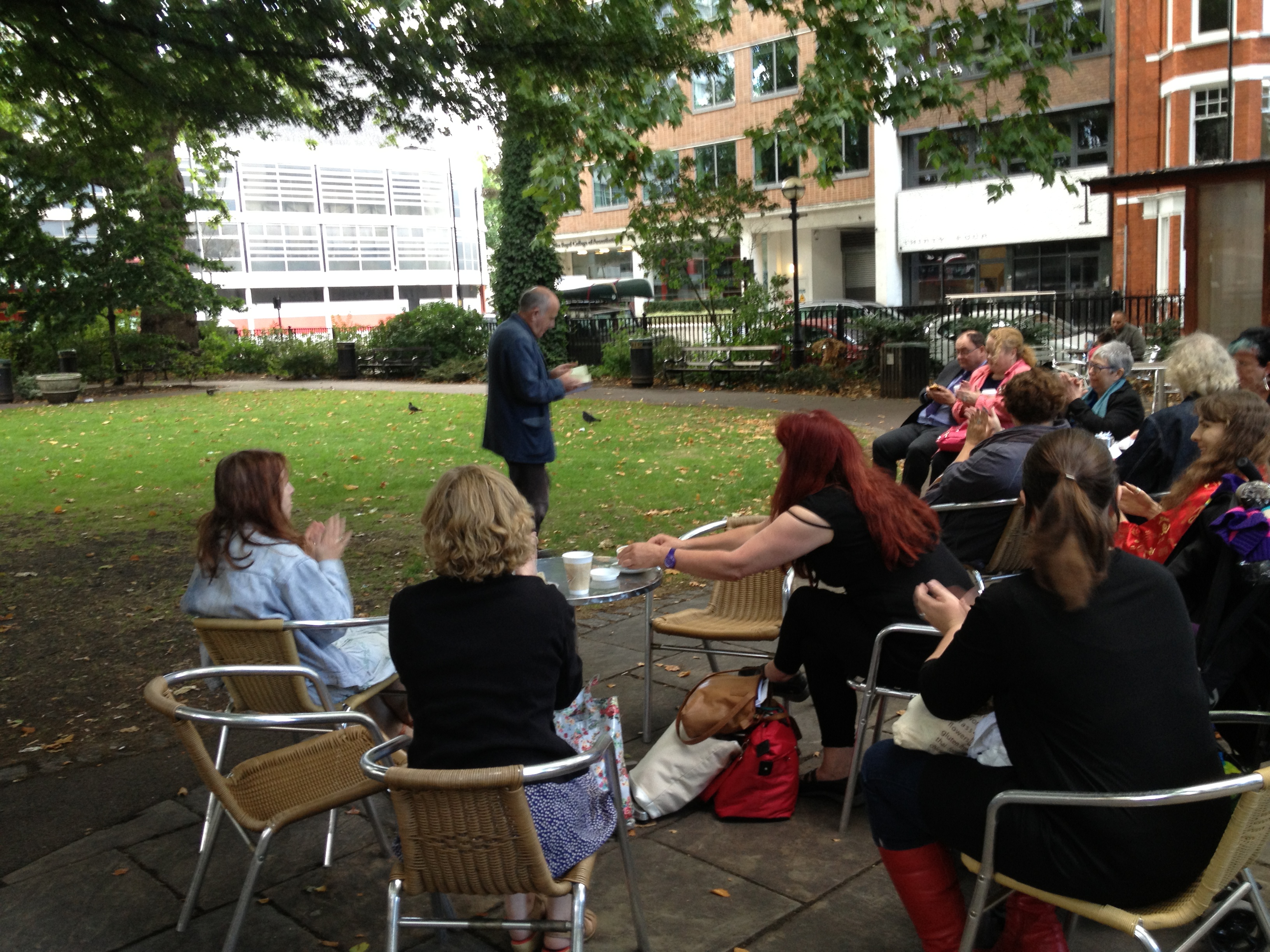
There are pictures on the Poetry Book Fair site of the rows of poetry book stalls and of some of the readers., proving that poetry publishing is lively, healthy and diverse. The photo above is one that Charles Boyle might not have known about; there was a Book Fair Fringe going on, in the cafe in Red Lion Square, just outside the venue. This is Nicholas Murray, reading from his collection from Melos; “Of Earth, Water, Air and Fire – animal poems”.

I WISH there were at least two of these events every year!

The Enlightenment Has Gone Too Far

pendulum

In a blog post I wrote here a couple of months ago I wondered what was to become of poetry, in a soliloquy triggered by Salt’s move away from publishing poetry collections. Since then I’ve been musing on why the future of poetry even matters. If my ‘hobby’ were brass rubbing or model railways, it would be enough to just get on with it, with no need to evangelise the world. But I believe that poetry is more fundamental to humanity than that, and it shouldn’t be the minority sport it currently seems to be. In some ways, this is an essay I wrote in my head while studying for my MA at Royal Holloway, but I never wrote it all down until now.

The German poet and academic, Durs Grünbein, wrote a terrific little book of essays called The Bars of Atlantis. In one of those essays he reminds us that Plato, in his utopian book Republic, wanted to ban all poets from his ideal state and replace them with philosophers. The reason for this is that poets are inspired by the gods – they don’t really know what they are saying. Their work appeals to the emotions and the irrational part of our nature. Philosophers, on the other hand, use logic and reasoning to deal with human issues. Plato finds that preferable.

You might say that this was the beginning of that great human project: ‘The Enlightenment’. If humanity is to progress, thought Plato, it must turn away from the emotional and irrational, and value only tangible objects and hard facts. Some other German literary theorists, Thomas Adorno and Max Horkheimer, writing in the early 1940s, when you might have thought they had more pressing preoccupations, stated that; ‘Enlightenment’s Programme was the disenchantment of the world’ meaning, literally, the removal of enchantment, superstition, woo. A switch, if you like, away from feeling and towards knowing. They went further, asserting:

Anything which cannot be resolved into numbers… is illusion; modern positivism consigns it to poetry.’

How much truer that is now than it was in 1944. In our society, poetry barely touches anyone once they are beyond school age, surfacing only at the occasional wedding or funeral. Instead, in the developed world at least, a grasping materialism has won out over every other philosophy ever espoused. And where has that got us?

I think we need poetry more than ever, post World Wars, post 9/11, post credit crunch. And we need it because it connects us to a side of human nature that has been increasingly suppressed since Plato. The arts are the last refuge of our emotional natures – a place where truths can be expressed in feelings rather than numbers – which may allow those truths to penetrate more deeply into our consciousness. I don’t see this as an opposition to rationality, I see it as a complement to it.

Various thinkers have expressed the idea that humankind is a language animal. Not to say that no other species is able to communicate, but for humans, it’s the fundamental ability that sets us apart from others and has made us able to understand, collaborate, record, learn and, hopefully, progress as a species and a civilisation. Because of language we can express complex abstract thoughts – like the ones you are reading now – and understand the mind of another human being. And poetry, being made of language, is one of the chief ways we can meet another mind. Because poetry uses not only the meaning of words but also their sound, rhythm, and cultural resonances, it’s more powerful than other forms of language, and has the ability to transmit not only ideas, but emotions, experiences, memories.

T. S. Eliot invented the concept of the ‘Objective Correlative’.  He said that:

The only way of expressing emotion in the form of art is by finding an “objective correlative”; in other words, a set of objects, a situation, a chain of events which shall be the formula of that particular emotion; such that when the external facts, which must terminate in sensory experience, are given, the emotion is immediately evoked.

So far, so dry and dusty. But Eliot is actually saying that it is possible to invent a series of words, with all their associated rhythms, sounds and meanings, which can evoke a specific and particular state of mind in the reader. A poem is a recipe for an emotion. It’s very nearly a magic spell. Eliot, like a number of other poets through the ages, sensed the shamanistic properties of poetry, and poets’ flagrant use of language to alter the states of consciousness of their readers. This can also happen with music, or a movie, but I think poetry is the most concentrated form. Little quantum packets of life heading straight for your brain.

One of my favourite contemporary poets is Alice Oswald. In a piece she wrote for The Guardian on Ted Hughes (a poetic Shaman if ever there was one), she describes the first time she read Hughes’ poem ‘The Horses’:

What struck me straightaway was the real, breathing presence of those horses. They hadn’t been described. They hadn’t been defined or suggested or analysed or in any way poeticised, but summoned up alive, brought back into being in the medium of language, still “steaming and glistening”.

Oswald acknowledges Hughes’ power to ‘summon’ the horses into her mind’s eye. She saw them as Hughes saw them; he shared that moment of his life with someone he didn’t know, and she understood it. Poetry can be powerful.

Maria Miller, our current Culture Secretary, recently said that arts executives need to “hammer home the value of culture to our economy”. She obviously sees the arts she is responsible for as simply commodity entertainment. I think she’s totally missed the point. Culture – the arts – is of value to our whole society and our collective sanity. We live in a world where more than ever we need to understand each other, see the world with another person’s eyes. Only by doing that can we develop empathy and only with empathy can we forge a decent society. Reading, listening to and writing poetry should be a big part of that. That’s why we need to find ways of stretching the appreciation of poetry to a much, much wider audience. That’s why somebody has to keep printing poetry, and putting on poetry events. That’s why the future of poetry still matters.

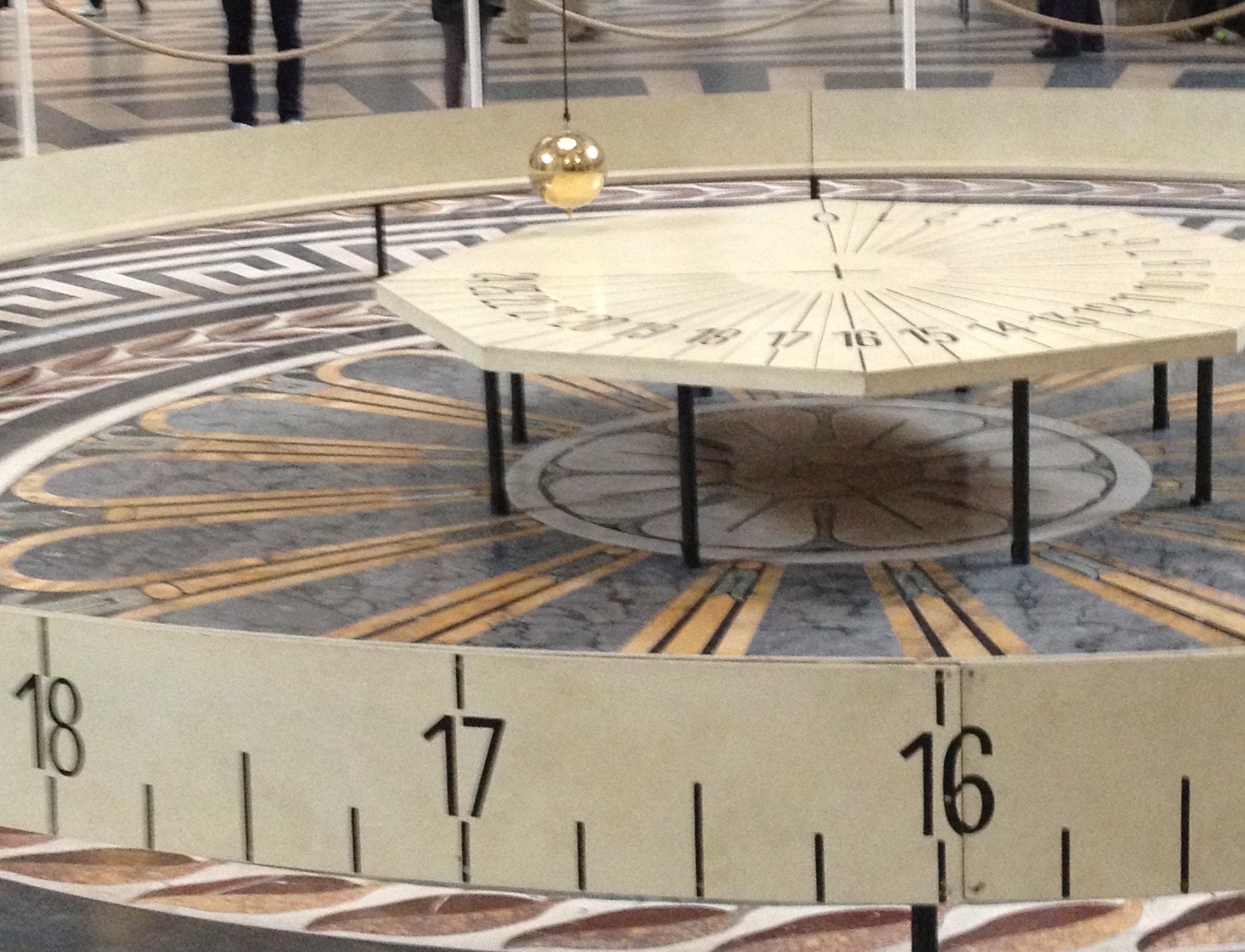
The photo here is Foucault’s Pendulum, in the Pantheon in Paris. The building was planned as the church of St Genevieve, but part way though building it, the Revolution happened and it is now a “secular mausoleum”. Marie and Pierre Curie are buried there, among many other French dignitaries. I thought it was a nice parable of the triumph of the rational over the emotional.

Eighty Thousand Words

Paris etc 059A few months ago, I wrote in these pages that I had embarked upon a novel. Well, last night, it reached 80,000 words – the minimum length of a novel as we understand it (the maximum seems to be 120,000 words, so I have some scope for expansion). I’ve got to the end of the plot, and I’m now embroidering the sub-plots, adding some ‘local colour’ around some of the locations – that sort of thing. The last piece to be put in place will be derived from a trip to Turkey, which we are planning to take in September. Then it will go to my lovely agent, Anna Power, for her comments and edits.  I really really hope somebody will like it enough to publish it. You never know.

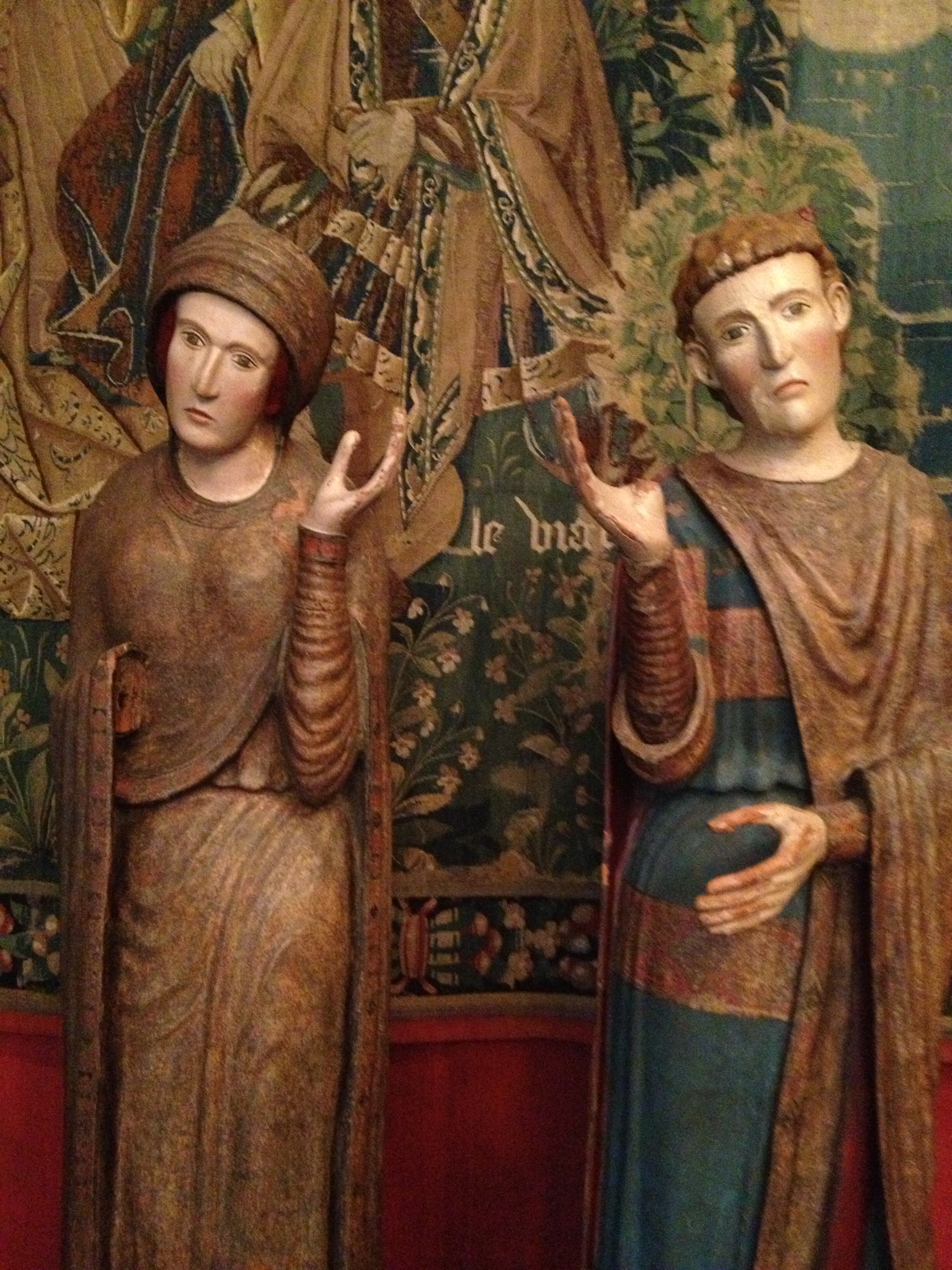
And the characters in the picture above, who reside in the Museum of the Middle Ages, in Paris? Who are they? They feature in my story.

Meanwhile, I have to think of a subject for a second novel. Or, alternatively, I have to apply for some proper jobs.


Poetry 101 – Building the Brand

046It’s a supply and demand problem. We’ve got some amazing new poetry in the UK at the moment, but nobody wants it. Ever since Salt Publishing announced (well, sort of, there wasn’t exactly a Press Release) that it would no longer publish any new poetry, apart from anthologies, there’s been a round of agonised hand-wringing in the poetry world. Poets want to know why it is so hard to publish poetry books, and why, when they are published, they barely sell more than a couple of hundred copies. Poets who have their first collection out want to know why they are permanently classed as ‘emerging’ rather than ‘established’ poets. There has been talk of the End of Poetry.

At the root of the problem is this; poetry in this country is a subculture (or maybe a cult). It’s generally only the people who write poetry who also read poetry, because they are the only people who really understand it and have their ears and brains attuned to it. Even some of the people who write the stuff don’t know how cringingly bad their work is, because they don’t read enough of it to have an appreciation of what good poetry looks and sounds like.

I earned my MBA from London Business School. I could (and I might) spend time drawing up a Porter’s Five Forces diagram for poetry, or doing a SWOT (Strengths, Weaknesses, Opportunities and Threats) analysis. There are poets who would shudder at the idea that poetry might even be amenable to such commercial dissection, and I will address some of the less ‘monetisable’ aspects of it in a later post. In brief, though, poetry needs to make a profit, or at least break even, before it can be published. Some people may subsidise the magazines they run, but for most of us that’s not viable and I maintain it shouldn’t be necessary. So, there are four ways we can consider making a positive difference to the margin:

1. Charge more for the product.

This probably isn’t going to work. It generally only works if people are clamouring to buy the product in the first place, and scarcity (c.f. designer handbags) adds value to the proposition. Although, I will say that one bookshop I know sells a lot of American poetry books, and the shop owner believes this is because they are beautiful objects in their own right; smooth paper, attractive typefaces, good typesetting with plenty of white space, luxury endpaper, gorgeous covers. The poetry gift market, maybe. Certainly books to treasure.

There’s also something to be said for ensuring that the quality of the actual poetry between those covers is high. Every poem needs to earn its place in a collection, there’s no room for fillers and makeweights. The skilled editor is key in this endeavour. Maybe there are too few of them around. Maybe those who are around, are unappreciated.

2. Charge less for the product.

This only makes sense if it helps you shift more stock, which is unlikely. Maybe there is a market for poetry downloads for Kindle, or poetry apps. One thing we shouldn’t do is make actual printed books look any cheaper or tackier. There’s such a thing as a ‘value signal’. I’m fond of the Stella Artois approach; reassuringly expensive. I don’t think there is much call for discount poetry.

As for low quality poetry; well, Pam Ayres, Helen Steiner Rice and Patience Strong have always sold well. Hallmark Cards are still in business. There is a lowest common denominator approach that hinges on giving the people what they think they want, rather than giving them something wonderful. Reality TV works on that premise. I’m assuming that most poets don’t want to go there. I certainly don’t.

3. Upgrade the Product.

This is a bit radical, but examples of it working are already available. If printed single-poet collections don’t sell (unless you are Seamus Heaney or Carol-Ann Duffy, or indeed, Pam Ayres), then sell your poetry in other formats. Spoken Word events are thriving, and poets who mostly perform their work seem to be appreciated by a growing ‘youth’ audience. Crossover with rap music is helpful, as poets like Kate Tempest (recently endorsed on twitter by Stan Collymore) have found. Poets who have been genre-busting for decades, like John Hegley and John Cooper Clarke, have found their audiences by getting out into comedy and music, respectively. It hasn’t done their careers any harm. It certainly helps to be accessible, but it may not be the place for every earnest experimental poet. It’s also a tough, gigging lifestyle, like being a stand-up comic. Not everyone is well-placed to do that.

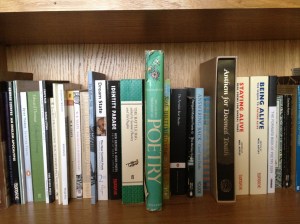
Anthologies sell well. Bloodaxe have produced ‘Being Human’, ‘Staying Human’ and ‘Identity Parade’; the first two of these, at least, have stretched out beyond the usual poetry audience. Salt are cannily hanging on to the annual ‘Best British Poetry’ anthologies and have recently showcased new talent in ‘Salt Younger Poets’. But having read one or two excellent poems in those books, how many general readers then go on to look for more work by the poets they enjoyed? It doesn’t translate into sales.

Themed ‘Poetry Projects’ are fashionable at the moment. ‘Binders Full of Women’, ‘Poems for Pussy Riot’ and ‘Penning Perfumes’ address particular topics and cause a buzz in the poetry world. Publications are sometimes secondary to performance, and kudos to anybody who runs any of those performances outside London.  (It seems the ‘poetry set’ really believe that putting on a gig in a pub in Clerkenwell is central to national culture – to which I would say, it is necessary but not sufficient, because these gigs rarely engage anyone who isn’t already in the poetry world. Where are they advertised? – mostly to a bunch of known poets who haunt the right pages of Facebook.)

4. Expand the Market

I’ve been told that the market for poetry in this country is between 5,000 and 10,000 people, most of whom also write poetry. In a country of over sixty million, it isn’t hard to deduce that we could do better.

The market segment we should be aiming at, in the first instance, are those who are educated, and enjoy other aspects of the arts, but never, ever, pick up a book of poems unless they are choosing something to read at a wedding or a funeral. If I were a marketing manager working for UK Poetry plc, I’d call this market segment the ‘Nearly Theres’.  They buy music, by CD or download; they will appreciate the lyrics of a singer / songwriter and might go to gigs or festivals. They love literary fiction and clamour for the new Booker Prize shortlist. They might venture to the theatre to see some fairly serious plays. They watch BBC 4 history documentaries, and read the arts review pages in the weekend newspapers. They would love poetry, but they don’t know they need it.
045

When I’ve asked friends of mine who don’t read poetry, why they don’t read poetry, they put forward two major complaints:

A)     It is all about clouds and butterflies and full of ‘doth’ and ‘hath’ and is generally soppy, impenetrable and does not engage them with its subject matter. They are a bit worried about having to listen to a lot of embarrassing soul-bearing.This view is caused largely by lack of exposure to contemporary poetry. You may say that things are better at school now, with anthologies that stretch to Duffy, Armitage and Zephaniah, but in order to access the sixty million, we do also need to reach people who were at school a while ago.

B)      It is frightening and intimidating. They fear they won’t understand it because they are not clever enough. They think poetry is a pastime for the elite. One friend of mine said this:

“I don’t know anything about poetry and I don’t know where to start. I’m afraid that I’ll say things such as ‘I like that because I see the picture of the glorious scenery in my head’ only to be stared at and laughed at by intelligent people and discover it’s actually about early twentieth century Soviet Gulags and that I’ve missed the point entirely.”

I think this is also partly caused by the way poetry has been taught. Students are taught to dissect poetry, looking for alliteration, synechdoche and so on, but are never asked how the poem made them feel, what they like about the sound and rhythm of it, what the poem conjures up for them, how it makes them think differently about the world. It’s like telling a mechanic to strip and rebuild a car engine, then asking her what it feels like to drive the Nurburgring. We’ve failed to transmit the enthusiasm, or indeed the purpose, of the poem.

I do not think it is a hopeless task to engage vastly more people in poetry. I know it can be done, because it happened to me. And here’s my evangelical conversion story: I read, and wrote, a little poetry at school as an adolescent. Doesn’t everybody? I went into my twenties with a handful of poetry books to my name; a Golden Treasury of Poetry, The Faber Book of 20th Century Verse, a collected Betjeman, and Penguin Modern Poets – The Mersey Sound. That was it. I studied Life Sciences, got a job in the pharmaceutical industry, and became a Nearly There. What made the difference to my poetic journey? Three things:

  • A friend bought me Wendy Cope’s Making Cocoa for Kingsley Amis as a birthday present. Light, accessible, but also engaging, well-crafted, and funny.
  • I heard an interview with Alice Oswald on Radio 4’s Front Row, listened to her read some excerpts, and immediately ordered a copy of Dart from Amazon.
  • An on-line friend showed me some poems he had written. I realised that Normal People both read and write poetry. I started noodling around with writing poetry myself. I began reading again with the accessible end of the list. I needed a little exposition to move on to something more chewy. I’m still not completely there with the elliptical and associative stuff, but I’m open to learning.

005

So, in short, I don’t believe it is hopeless, but I think the key to saving poetry is to push it out to a much, much wider audience. It will take some radical re-thinking of how poetry works. I don’t know whether contemporary poets have the appetite for this, or whether they quite like being part of an initiated elite, indulging in something that is not a commercial proposition, but only a kind of mystical one.

I realise I haven’t got down to the big questions; how to engage more people with contemporary poetry, and indeed, why. I’ll save both of those ideas for later.


Totleigh in the Springtime

What a perfect week at Totleigh Barton – the Arvon Foundation’s gorgeous, pre-Domesday-Book retreat in Devon. It is settled in this wonderful valley full of orchards and cow fields and it feels old, really old. When I think about the different types of English those walls have heard spoken, I’m overawed by how ancient and historic the house is, and what a privilege it was to spend time there with other writers in such gorgeous spring weather.

It’s the first time I’ve been on an Arvon course about prose – previously I’ve been exclusively interested in poetry. I felt that I’d gone back to Square One, with no real idea whether I can even write prose; but the encouragement of the marvellous Maggie Gee and Nii Parkes was a tremendous boost – and my fellow students also seemed to like the excerpts I read for them.  A novel about the pharmaceutical industry? Crazy – but it just might work!

The very first things they asked me, floored me.  What’s the theme of the book? What’s the climax of the plot? Well, the theme may be twofold: 1) Science and scientists are interesting, and creative, and 2) how knowledge is lost if we don’t take care if it, but may be found again. And the climax of the plot, well, you will have to wait and see, but at least I’ve got one, now…

It was a great treat to have Hisham Matar visit us and read from his new work. He’s writing a dramatic monologue, for performance, which hovers between prose and poetry, and hearing it read by the author was a stunning experience.

It’s always simplistic to say that someone is “the new whoever” but this week I heard echoes of Barbara Pym, David Lodge, Helen Fielding, Orhan Pamuk, Janet Fitch and Ian Fleming. I look forward to seeing these wonderful stories in print.

I feel I can get on with the book now. I know where I’m going and I’m much more confident that I’ll get there. That is, after a few alcohol-free days and a big catch-up on sleep.

I LOVE Arvon.


Three Poets on World Book Day

Sarah Hesketh reading, Oliver and Claire seated

Sarah Hesketh reading, Oliver and Claire seated

World Book Day – and everybody literary had organised something for us to go to that evening.  Which is odd, when you think about it, because they all clashed, so we were all forced to just choose one. I was miffed that I couldn’t go to several other events in London and Oxford, but I went to Beaconsfield Library, to hear three poets from Penned in the Margins, for three good reasons:

  • It was nearest to home and I’m lazy
  • I’d promised myself I’d go to one of Claire Trevien’s book launches and missed the London and Oxford ones due to other clashing appointments
  • I’m supposed to be doing a review of Oliver Dixon’s book, and background info is always good.

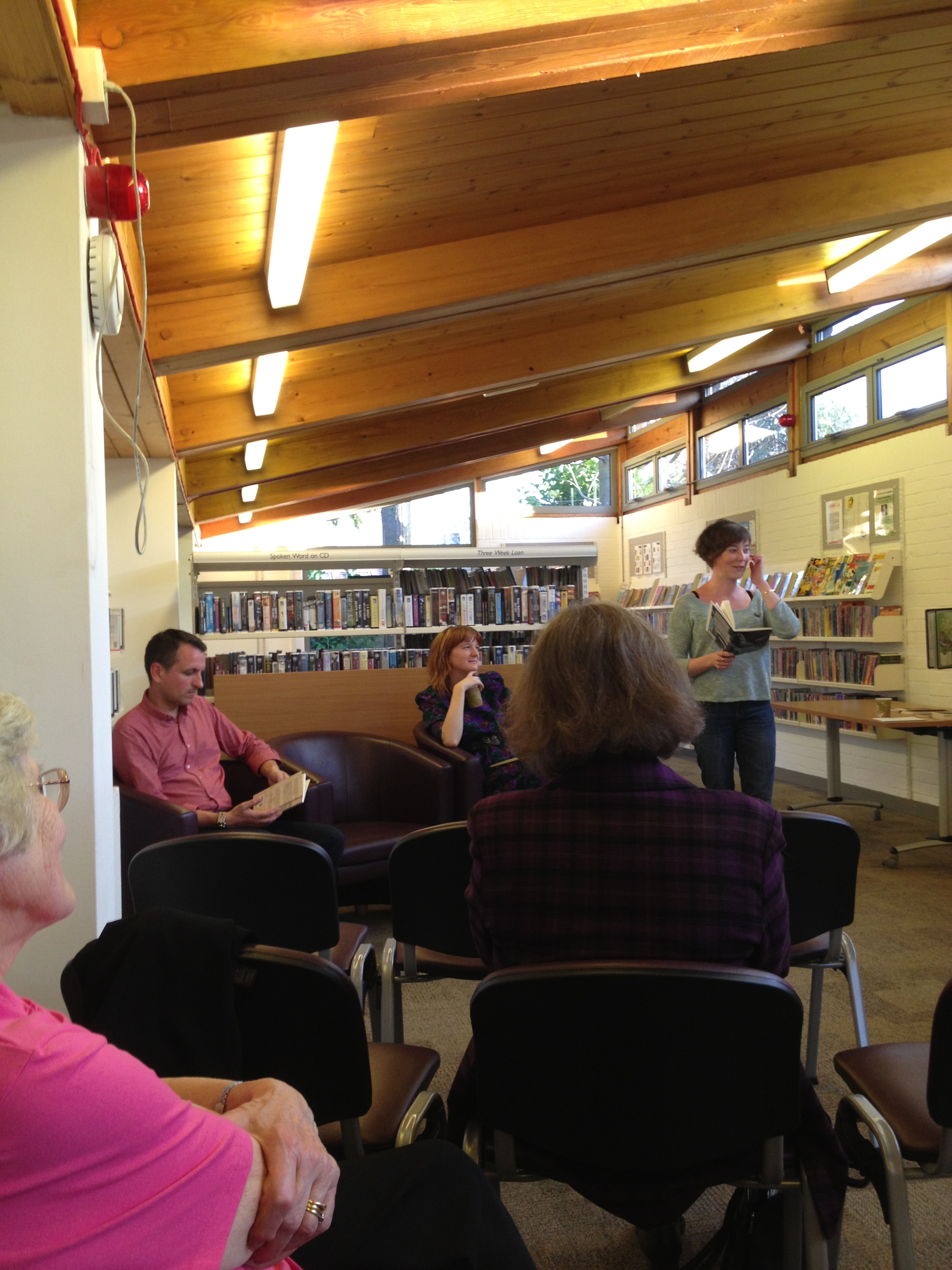
This is how poetry is supposed to be: some chairs hastily set up in  a provincial library on a lovely spring evening; a cohort of older ladies who know one of the poets from a poetry group; a photographer from the local paper; free chocolate biscuits. And time to ask questions at the end.

The first reader was Sarah Hesketh, who to my shame I’d not heard of before, reading from her 2009 collection Napoleon’s Travelling Bookshelf. This gets my WIST award (Wish I’d Said That) for the most envy-inducing language. My favourite was ‘The Boy Who Read Homer To His Cat’, about a dying cat called Hengist, which is excellent in so many ways:

He thinks about a hardening of earth
about a barrow. The point
at which his eyes will narrow

to the split-width of a star
and he shall raise his rift of fur
against the northern winds

his soul flying out over the whale-road

Go well, Hengist! Sarah also read three new poems on the subject of ‘endlings’; the official name for the last animal of the species before extinction; a chance to meditate on isolation and death (so many dead animals!). I loved the poem about the last Rabb’s fringe-limbed tree-frog, saying goodbye to the second-last of its clan. Hoping those get published soon.

Next up was Claire herself, last seen in these pages running the Penning Perfumes event in Oxford. Her collection, The Shipwrecked House, is newly available, and blends Claire’s Breton origins with her English life. The sea features heavily; there are whales under the floorboards, rusty seas and whiskered fish. Wedding rings are twisted like weathervanes, there are poems inspired by Rimbaud and Breton dancing. Lovely, delicate, spooky poems, with striking use of language and an eye-catching cover.

Oliver Dixon is a little older than his co-readers, and although he said he has been writing for many years, he might not have published a collection if Tom Chivers of Penned in the Margins hadn’t seen one of his poems and contacted Oliver to see if there were any more. I won’t say too much, because I’m reviewing his book Human Form, for Dr Fulminare on the Fuselit website. The title poem explores material familiar to parents – how when you have a small child, you are never sure where you, and the child, are going to wake up: ‘Pluto and Tigger my feral bedfellows, / Spiderman lamp still on in the light.

A very satisfying combination of polished poetry from three engaging readers. And, driving home over the top of the Chilterns, I saw a UFO, which might lead to a poem of my own.


And this is all I’m going to say about her

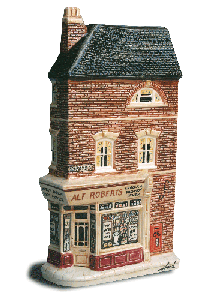
hazlealfroberts

A few years ago the subject of Margaret Thatcher arose in an on-line poetry forum I used to frequent. I was taken aback by the very personal, misogynistic and crude ad feminam attacks that resulted. I know there’s a lot that could be said about her and her legacy, but I tried to be a little more subtle. I wanted to think about her early life, and how that might have affected (not to say jaundiced) her view of the world. The result was this early poem:

A Nation of Shopkeepers

Here, among the cartons and the crates,
crouched in the stockroom, the grocer’s daughter
knows the price of everything. She has learned
which are the good customers, who smiling, drop

their shiny shillings in her outstretched palm
and to spot those who, in plain daylight,
will pilfer from the shelves without a thought
or, ingratiating, ask for tick

against next payday. Then she sees them run
straight from the grocer’s to the betting shop.
They have no thought for how the grocer puts
food in the mouths of his own family.

Her dad, brown-overalled, pen behind his ear,
negotiates by phone with his suppliers.
They’d like to hold the shopkeeper to ransom
which isn’t to be tolerated. This

is business, and each honest businessman
must take care of his family and his cash.
If Dad would only let her mind the till,
this grocer’s shop would be a bigger business.