At the Albion

024

Over the last few years I’ve been to a number of poetry readings at the Albion Beatnik bookshop in Jericho, Oxford. The proprietor, Dennis Harrison, puts in some very long hours to support poetry in the city. With any luck, he makes a small profit from door money and interval drinks, but really, he does it for the love of literature and his loyal bookish community.

I wanted to read there before I disappear northwards, so I asked three friends to join me, and Dennis agreed to us holding a reading called “The Poetry of Place”. Places are on my mind at the moment, because of our imminent departure north (I say “imminent” but we still haven’t exchange contracts on the house.) So I read about Stoke on Trent, Belfast, Newcastle, Boston, Ukraine, Henley on Thames and Nettlebed; Andrew Smardon read about Oxford, Scotland, Iceland, and being on the motorway; Annette Volfing read about Denmark, England and Africa, and Ben Parker, who had said he didn’t really write about places, gave us a travelogue of wonderful imagined destinations.

Over the last few years I have been in poetry workshops with each of these poets, and it’s a real joy to hear poems that I first saw as drafts, all polished and beautiful at the reading. They sounded wonderful, and it was great to see so many friends in the audience; particularly members of Oxford Stanza II, and my former teacher, Olivia Byard.

Reading at the Albion Beatnik – another item crossed off my bucket list.

Lots of Planets Have a North

Some of the best things happening in poetry at the moment are the on-line, one-off, non-standard anthologies of poems and other artistic work being curated by people with great ideas and imagination. Two such people are Claire Biddles and Emma Jackson, who have taken a line from the Christopher Eccleston incarnation of Dr Who (see the title of this blog post) and used it for:

A beautiful collaborative publication exploring the North of England as it is lived, remembered and dreamed of.

The blog for this project has just started on tumblr, and there is a kickstarter ongoing to fund a book of the same name. I’m delighted to have two of my poems in at the beginning of the blog project, especially because I’m heading back to the north myself very soon. So, one of my poems remembers visiting relatives in Newcastle with my parents, and the other is about having almost got comfortable in the south of England over the course of 25 years, and now being uprooted back to my ancestral homeland.

Please visit my poems on the blog! And thank you, Emma and Claire, for featuring my poems on LOPHAN.

Concrete

I’m interested in the way poems sit on the page, and what cues a reader can take from the layout and the white space around the words. It’s a big subject, and we looked at it in our class in Newbury last term. I suppose it reaches its apotheosis in the “concrete poem”, where the poem takes the shape of its own subject. I took as examples, Philip Gross’s “Amphora” (the only version I could find on line was mistakenly left-aligned, so for the full effect you would have to download and centre-align it) and Edward Mackay’s “The Size of Wales” (not on line). Not only are they visually interesting, but also excellent poems in themselves.

Encouraging the class to have a try at this form, I decided to join in. Looking at Glass’s “Amphora”, I thought a symmetrical object might be the easiest way to tackle this. And this became a poem about something I’m going to miss when we move house. It’s dedicated to the Nettlebed bellringers.

St Bartholomew’s Bells.

not
just

on Sundays
for holy communion

or sunny Saturdays in June
to ring in the bride and groom

and not just Christmas Eve after
drunken carollers lurch for home

or Easter Sunday when solemn Lent
is done and Spring is coming ringing in;

I like to hear them chime on Wednesday
evenings with the windows open in my room

just for the fun of it and for the practice, the Old Golden
& the treble-bob, saying all’s well in the village. What could
be
more
English
?


Ampthill Literary Festival

File:Ampthill market place.jpg

I’m very excited to be part of the first ever Ampthill Literary Festival, which happens on July 5th and 6th in that lovely Georgian town in Bedfordshire. Many thanks to local novelist and blogger Rachel J Lewis for inviting me. There will be poetry workshops – details to follow shortly – and an extremely good vibe, including the parallel festival of AmpRocks with rumours of a fab headline act, as always!

This is going to be an excellent summer weekend. Hope to see some of you there for poetry readings and workshops. Now, what rhymes with Ampthill? It’s an interesting place and deserves an Ode of its own.

Writing Process Blog Hop

photo (1)

Historical Novelist Louise Turner, who wrote the excellent Fire and Sword, has tagged me in the latest (or almost the latest) writing blog hop. I have to answer some questions about my writing, and if you are reading this and you are a writer, I’d be happy to tag you to write your own version a week from now. So, here goes…

1) What am I working on?

Well, I’ve got quite a bit further with my first novel since I last mentioned it, and as usual, I’m writing poems all the time, which actually come a lot more naturally to me. The novel, under the working title The Crocus-Gatherers, has now got to the end of the first draft, but I know there’s more to do on the characterisation. I have to make the reader know and care about my lead character as much as I do, but I don’t think I have really got her on to paper sufficiently as yet.

2) How does my work differ from others of its genre?

What genre is that? I suppose it is a kind of thriller. My husband says it’s not so much a “whodunnit” as a “whydunnit”. I’ve woven a kind of mystery story using a lot of what I learned about the workings of pharmaceutical and biotechnology companies. I think it is different because my lead characters who are scientists who are good at what they do but are actually ‘normal’ people – not ‘boffins’ or autistic-savants, just bright people trying to learn something about the way the world works as well as negotiate their way through the academic and office politics they find themselves in. They go to the pub, they fall in love, they watch TV and eat pizza, but they are also trying to bring new medicines into the world, which is both an intellectual puzzle and a great motivating factor in their lives.

The poems are really a response to living in the world, continually questioning what I find there and wondering about it. They come from a different part of my brain from the novel. Fiction is a cerebral pursuit, like writing an essay for a college course. It comes from the higher part of the brain. Poems are deeper-seated. Like many poets, I get a funny feeling when there’s the seed of a poem arriving in my head: a restless and melancholy feeling, like homesickness or nostalgia. If my poems are different from anyone else’s, I’d say that quirky subjects appeal to me, and I want readers to see the world slightly differently after reading one of my poems.

3) Why do I write what I do?

The novel – because I am a storyteller and I have a story to tell. Because I want to entertain and, to a lesser extent, to show readers a different world from the one they inhabit.

The poetry – who knows? I think it is because I am always questioning everything I see, and living “the examined life”, and therefore I think I have something to say.

4) How does my writing process work?

With the novel it involves procrastinating, flicking through facebook and twitter, and avoiding any actual writing as long as possible. I do a lot of research, mostly on line, and when I find a little fact that will add to my plot, I get very enthused. I write on a rather old-fashioned PC in our little study. Sometimes I stop and watch the birds in the neighbour’s garden, and the Red Kites wheeling overhead. I’m not somebody who works through the night; I think afternoons and early evenings are my best writing time, especially with tea – not any fancy Darjeeling or Earl Grey, just regular Builders’ Tea with milk. What I am finding at the moment is that I am pretty hopeless at editing.

With the poems, once I get that funny poemy feeling, a line often pops into my head. Or sometimes I start from a line scribbled in a notebook – I carry a notebook most of the time. It’s often the first line of a poem, sometimes a last line. More rarely it’s a bit in the middle. I then start scribbling – in pencil if possible – and within a few hours I’ve got the basic poem down and I type it up and tinker with it. Then it works on a sort of 80:20 basis; it can take a few days or a few months to edit it, tidy it up, look for rhymes and chimes, and fiddle with the line and stanza breaks. The poems that get on to the page the most quickly and easily are usually the best ones. I’m lucky to have a number of people to send my poem drafts to, who will give me good and constructive feedback.

So, I hope I’ve answered those questions adequately!

William Thirsk-Gaskill is hereby tagged to provide his answers to those same questions next week.

I’m very happy to tag two more writers who would like to say something about their own work-in-progress, and their writing process.

All Good Things

cushion


Last night was the last night – of my poetry teaching in Newbury, which is a splendid town, and I wish I’d got to know it better. (Hi to the lovely staff at Costa Coffee, next to the Kennet & Avon!). I’m getting ready for our house move to the north – not quite sure yet whether we will be living at the very top of North Yorkshire or just over the border into Country Durham – but I couldn’t commit to another term, in case we had to up sticks halfway through.  I’ve loved it. The course, called, rather tongue-in-cheekily “Poetry for the Petrified” was intended for those who hadn’t thought much about poetry since school days but wanted to re-engage with contemporary poetry and express themselves in their own writing. Every one of my regular customers got something out of the sessions, judging by the way their writing morphed, and grew in confidence. Every one of them had a story to tell in poetry about their own lives, loves and experiences. I know I am leaving them in good hands, as the Corn Exchange Theatre has asked the amazing Ben Parker to continue teaching after Easter.

We looked at rhyme, rhythm, metre, the white space on the page, the sound of words, alliteration, imagery, writing in persona, ekphrastic poems, poems about memories, families and dangerous weather, with the help of Seamus Heaney, Ted Hughes, Philip Gross, Carol-Ann Duffy, Wilfred Owen, Ann Sexton, W.H. Auden, Roddy Lumsden, Alice Oswald, Philip Larkin, Wendy Cope, Jo Bell, Jacob Polley, Claire Trevien, Stevie Smith, Edward Mackay, Ian Duhig, and a few others.

I’ve really enjoyed it – it was my first chance to teach and I learned as I went along, but have already found it very rewarding to share some of the joy of poetry with other people. I really believe it’s both therapeutic and transformative, it helps us sort out what we think of the world. All poets are special people, because, by definition, they are living “the examined life” as they think about what they need to write.

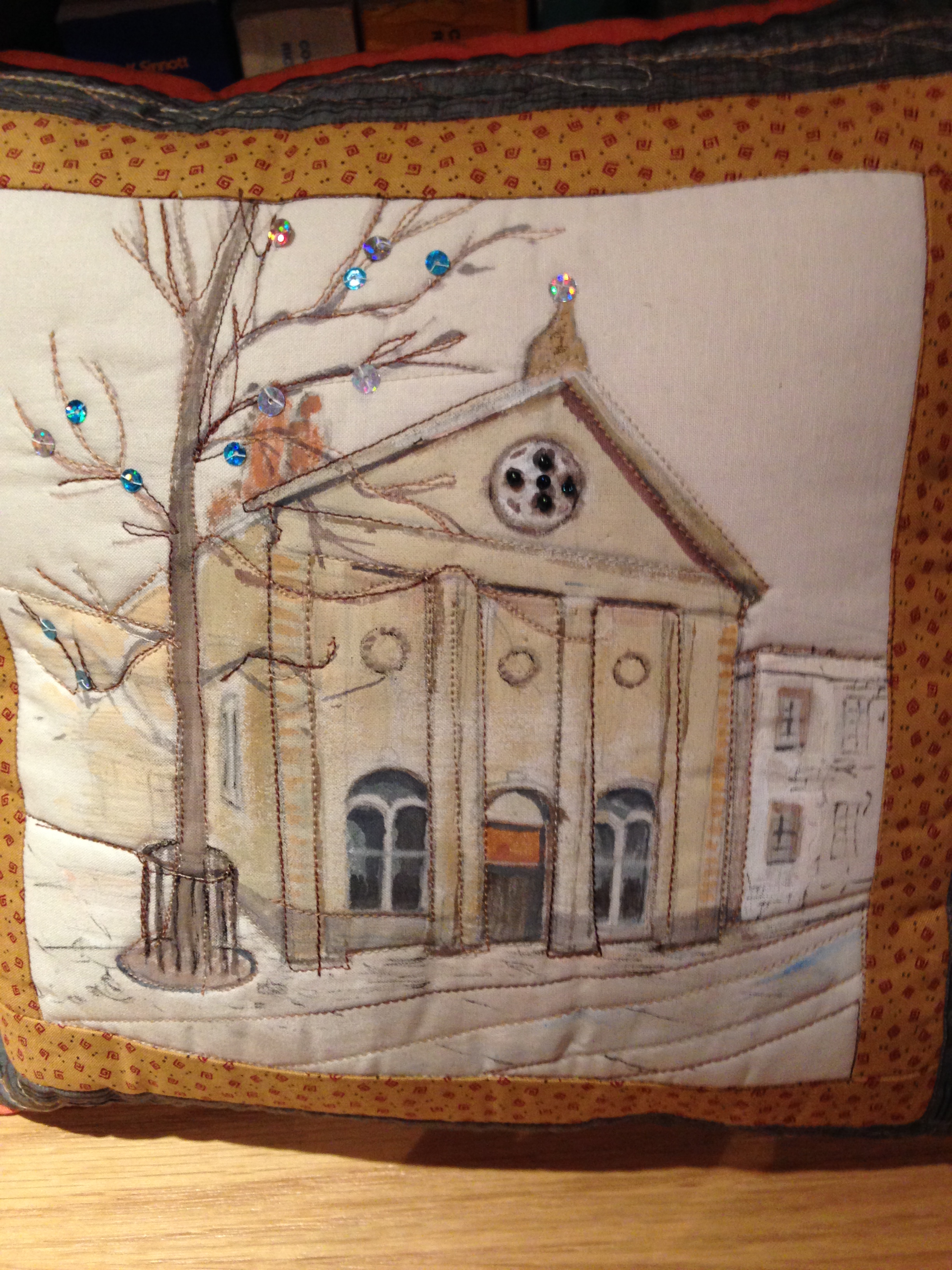
And above, there’s a picture of a wonderful surprise – a cushion made by my student Jenny Saady, who is a talented quilter, depicting the thriving creative hub that is the Corn Exchange Theatre. A unique souvenir of a wonderful time and place and lovely people. There, I’m tearing up now.

This is not my poem…

…it’s a “Found Poem” based on the tweets of Anthony Wilson (@awilsonpoet), a wonderful poet from Devon whose blog is here. This set of tweets, from the “Writing Research Across Borders 2014” conference in Paris, made me laugh. I tweeted back to Anthony that they should become a poem. He said, go ahead if you want to. So I put all the relevant tweets together for him, and here they are.

Poet Anthony Wilson presents a poster at #WRAB2014.

A man is speaking at #wrab14. Someone has graffitied ROFL on the wall behind him.

The other poetry poster at #wrab14 has not materialised. To quote Woody Allen, we need to show up

Very interesting and beautiful poster about yarn bombing as an act of protest

A man stops at my poster for a second, moving on when he fails to recognise my photograph

A man in a beret and orange jeans is looking at the What Happens in Class? poster

A woman looks at my poster and moves on, frowning

Update: the man in orange jeans also has blue glasses and a pink scarf. He does not look at my poster

A man just stopped at my poster for longer than two seconds. Getting known

No one has stopped at Yarn Bombing either

I return the man his glasses case but he does not look at my poster

The man in the beret has gone round five times. But he has not stopped to look at the poetry

A woman with an iPad photographs my poster

The woman who said she would look at my poster did not look at my poster

At the yarn bombing poster I say to the woman looking at it with me ‘Isn’t this great?’ ‘It’s mine,’ she tells me

The husband of the yarn bombing academic is really nice. We converse about Bermuda shorts, gaming theory and Kenneth Koch

The grammarian who overran this morning does not want talk to me about my poster

A professor stops at my poster. She points at my photo, then at me. ‘You are Anthony Wilson!’ she says

Three people stop at my poster at once

A man asks me about my poster. We end up discussing stationery shops

Outside is a statue of a giant thumb. It is not a metaphor. It is a thumb.


Another flood poem

Copyright Edwin Graham - used under a Creative Commons licence.

Copyright Edwin Graham – used under a Creative Commons licence.


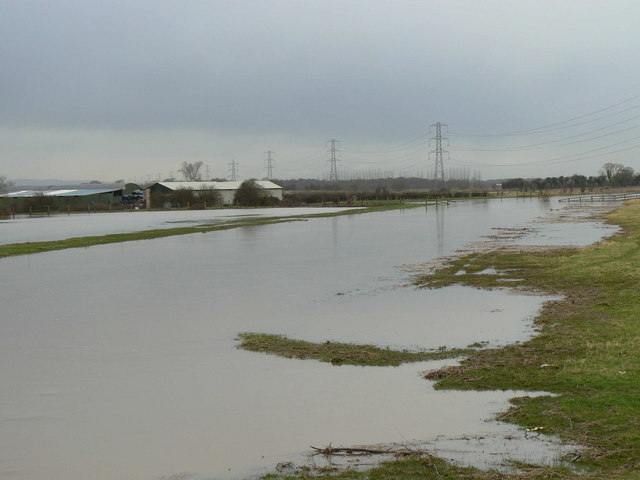
I wrote this poem a week or so ago and shared it with a few friends. A couple of them wanted to pass it on to other people so I thought the best thing to do was to post it here.

It was inspired by the twitter feeds of a couple of farmers from the Somerset Levels whom I have been following on twitter: @SouthWestFarm and @westyeo, who have been having a terrible time.

On The Level

The sky is wearing a blue dress today
coming on all innocent, but she’s been
a grey fiend since the year turned
and we’ve borne the brunt of it.

Lying so low, the Levels used to be
managed land, now there are untended
consequences. We’ve broken
a thousand year promise of pasture.

The water-birds lost no time moving in
and if we were swan-keepers or gull-herds, we’d be in
our element. But now it’s time
to move the cattle out, to higher ground.

They wade up from the barn, their eyes turn
from trust to terror; below the surface is only
folly and drowned grazing. These last few weeks
have silted up our hearts to overflowing.


The Rising River

The current flooding in the Thames Valley is scary.

No, I wasn't living there in 1947!

No, I wasn’t living there in 1947!

At a really early point in my poetry writing, I went to a workshop run by Jane Draycott at the River and Rowing Museum in Henley on Thames. I was scared. Everybody else seemed to know everybody else. There had been a series of workshops about the river when Jane was Poet in Residence, and I think I tapped into the very last one. The theme was “The Rising River” and it was about floods.

Thinking about what to write, I remembered the seven years we had spent in Windsor. It was only after we bought our house there that we realised we were living on a flood plain. We worked this out after visiting the pub at the end of the road, and finding photos on the wall of people rowing down the street in 1947. Despite this our house was built in 1957 – although I noticed there were a couple of steps up to both the front and back doors. I felt a bit safer once the Eton / Dorney rowing lake was dug, but I understand that isn’t necessarily coping right now.

Reading the resulting poem out loud at the end of that workshop was the scariest thing I had done since I sat my driving test. But many of the people I met that day are now good friends and I’ve had the pleasure of being taught by Jane Draycott at the Poetry School since then.

Flood Warning

We climb the stairs, suspecting, while we sleep,
the inundating tide will creep above its banks
bringing reeds, and planks, and water-weeds,
branches torn from their moorings, blooms adrift,
borne floating in the gift of the rising river.

The sandbags, propped rotund against our doors,
a futility of sacking, soon soaked and full,
are breached, as fish are washed, gasping and flapping,
into gardens. The flood, now feasted and replete,
making a midnight Venice of these streets.

Then we moved to our current location – on top of the Chilterns.

Books are a Feminist Issue

There’s been quite a bit of cyberdrama about this poem, and its video.

Mark Grist – Girls Who Read

Some women feminist poets, and some male poets who are undoubtedly feminists (or allies, if you deny that men can be feminists) are really angry that performance poet Mark Grist has produced a poem celebrating that intelligence is sexy, and that there is more to women than ‘tits’ and ‘arse’. They complain that this poem is still in the business of objectifying women. I can’t see how appreciating a woman’s mind objectifies her. The opposite, I would have thought. Grist’s poem delights in the idea of conversation and intellectual argument, in enjoying debating issues with a equal. One guy actually asked me on twitter: “What about women who don’t or can’t read?” presumably trying to be totally PC and inclusive. He might have been joking, but if not, then I’m sorry, but I found his comment unintentionally funny.

The feminist poetry magazine ‘tender’ was writing and  tweeting about this too. They didn’t give the video three cheers, they thought that telling us that women actually have brains was rather underwhelming. I’d rather be encouraging to a man who seems like a feminist ally, even if his commentary didn’t go far enough. They tweeted a link to poet and blogger delladilly who wrote a bitter parody of Grist’s poem, one which wilfully misunderstands his position. Instructing someone to ‘date a girl who reads’ assumes a position of entitlement to that date which Grist never claims. In fact the video is mildly self-deprecating. The girl who sits alone in the pub, reading, who inspires the poet’s tirade against his “tits and arse” loving friends, is so obviously reading to deflect unwanted attention from men. At the end of the poem, just as the poet is thinking of going over to talk to her, her boyfriend arrives, so the poet, for all his fantasies about life with an intelligent woman, is left on his own.

A further objection was that the poet mentions that he finds women who read sexy. It makes some feminists uncomfortable that Grist is still viewing women as objects of male lust. Well, I think any poet is entitled to discuss his thoughts and emotions. If you read Andrew Marvell’s To His Coy Mistress, Robert Herrick’s Delight in Disorder, or the supremely naughty To His Mistress, Going to Bed by John Donne, you will see male lust very openly displayed in great poems. To ask a man not to talk about his sexuality in poetry is to shut off a powerful strand of human experience. We should not be in the business of creating taboo subjects. To try to shut people down by dismissing their views – isn’t that what women have struggled against for centuries? Besides, if we ask the same self-censorship from women, there would be female friends of mine on Facebook who would need to keep their thoughts on David Tennant and Benedict Cumberbatch to themselves.

I suspect the people who are picking holes in Grist’s poetic performance are not his target audience, which is laddish young men, and women who seek validation in adopting a sexualised appearance. Granted, the poem does not give us a sophisticated view of gender relations, but I saw it as generally a positive feminist statement. Some commentators have asked whether it is a “feminist anthem”. Well, no. But it does try to counter the prevalent “rape culture” with a different view of women; one where their “passion, wit and dreams” are appreciated. I think in today’s cultural climate we should be grateful for that. Let’s not dismiss a feminist ally by saying he’s not feminist enough. There’s a slightly patronising note to the poem, and a faint note of self-aggrandisement (“Hey, look at me, I like women with BRAINS, aren’t I right on?”) but I’m prepared to take the sentiments expressed at face value.

So on the whole, I’d award two cheers to Mark Grist for saying something celebratory about women’s brains. Although seasoned feminists might not find it sufficiently revolutionary, his target audience might get something new to think about from this piece. I’d award one cheer to the feminist critics who have slated this poem, for not embracing what was generally a supportive statement, even if it was a bit “Feminism 101” for their sophisticated tastes.